
Pads, slabs and aprons
Concrete Flatwork in Justice, IL
Ground-level slabs formed square, pitched to drain and thick enough for what will sit on them.
Plain Concrete, Done Without Shortcuts
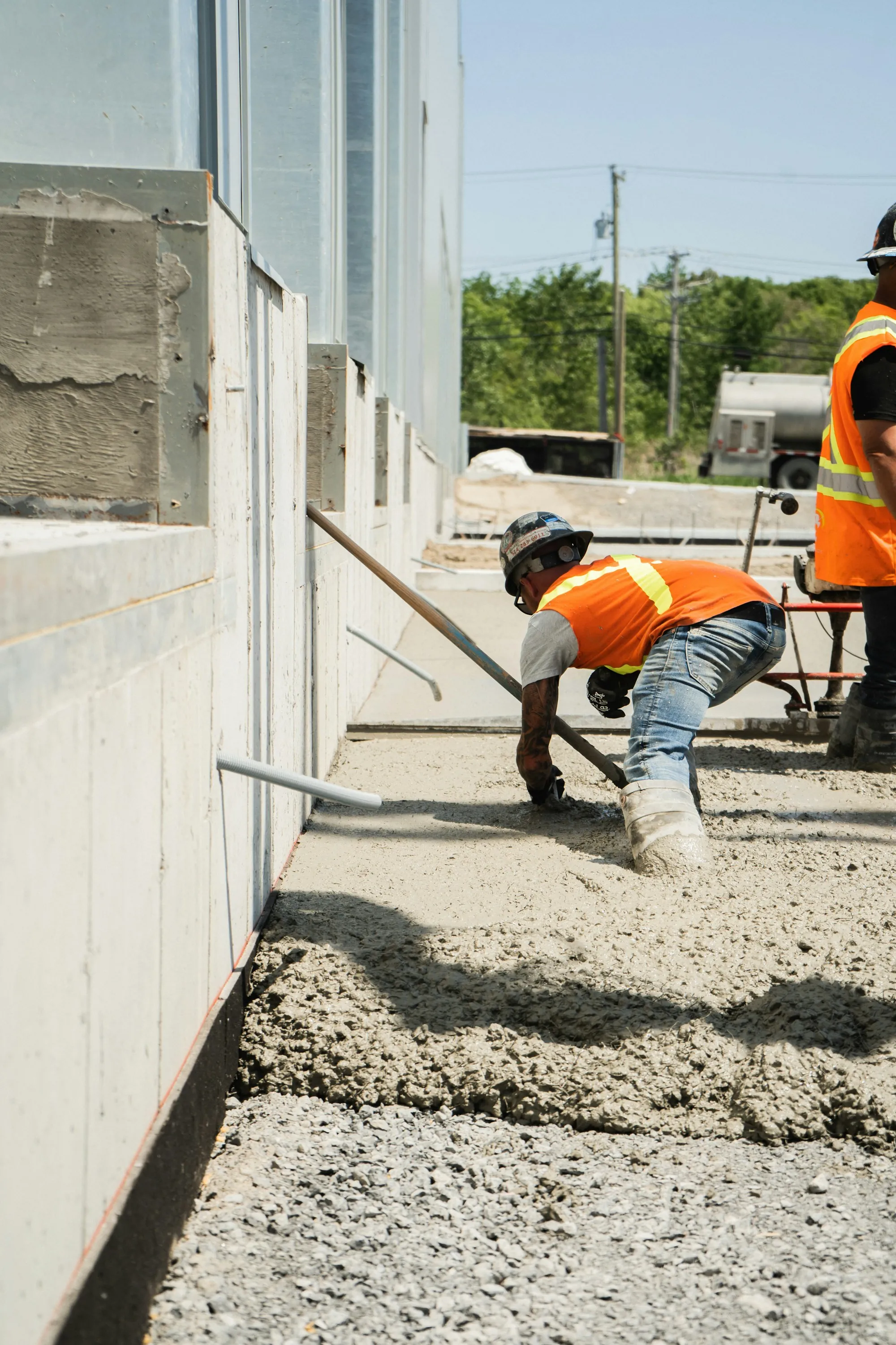
Flatwork is the unglamorous side of concrete. A pad under a shed. A slab along the side of the house where the garbage cans live. An apron that ties a driveway into the street. Nobody brags about these pours, which is exactly why they get rushed by other crews. Thin concrete over loose dirt. No pitch. No joints. Two winters later it is tipped, cracked and holding a puddle. We treat a four-by-eight AC pad the same way we treat a driveway. Soft soil gets dug out. Crushed stone is dumped, raked and run over with a plate compactor. Boards are staked to a taut string with a slight fall so rain heads away from the house and off the edge. The mix goes in, gets screeded and floated, then broomed so it is not slick when wet. Control joints get cut where shrinkage needs them. On clay-heavy lots like many in Justice, that stone layer is the difference between a slab that stays level and one that rocks like a seesaw by spring. Small job or long run of slab, the steps do not change.
What a Flatwork Job Covers
Size and use change from pour to pour. These pieces show up on almost all of them.
Layout and grade check
We mark the slab, shoot the grade and decide where water will go before a shovel hits dirt.
Excavation
Sod, topsoil and soft fill dug out to make room for base and slab.
Plate-compacted stone
Crushed stone spread and packed so the slab has even support from edge to edge.
Forms and reinforcement
Boards set to line and pitch, with wire or rebar added where the load or soil asks for it.
Pour and broom finish
Concrete placed, leveled, floated and broomed for traction, edges tooled smooth.
Joints and cleanup
Control joints cut, forms pulled, edges backfilled and the work area swept and raked.
How a Slab Goes In
Size it up
On the phone you tell us what the slab is for and roughly how big. Then we look at it in person, measure, and check where water drains now.
Price and prep
You get a written number with thickness, base and finish listed. On the work day the area is dug, the stone is packed and forms go in.
Pour and protect
The slab is poured, finished and jointed, then left to cure. We pull forms, tidy the edges and tell you when it is ready to load.
Why Our Slabs Stay Flat
Base first, always
Most tipped pads were poured on dirt. Ours sit on packed stone, every time.
Water has a plan
Each slab gets a deliberate fall, so nothing pools against the house or freezes in place.
Cuts in the right places
Joints spaced for the slab size so shrinkage cracks follow a line rather than splitting the middle.
- Packed stone base
- Pitched to drain
- Joints cut on layout
- Site left raked and clean
Shed Coming? AC Unit Moving?
Shed going up, new AC unit, or a muddy side yard that needs concrete. Give us the size and the purpose and we will talk thickness and price.