
Entry walks, gate paths, public walks
Walkways and Sidewalks Poured in Justice, IL
Walks that stay flush, drain to the side and give a solid footing on a wet morning.
A Walk You Do Not Have to Watch Your Step On
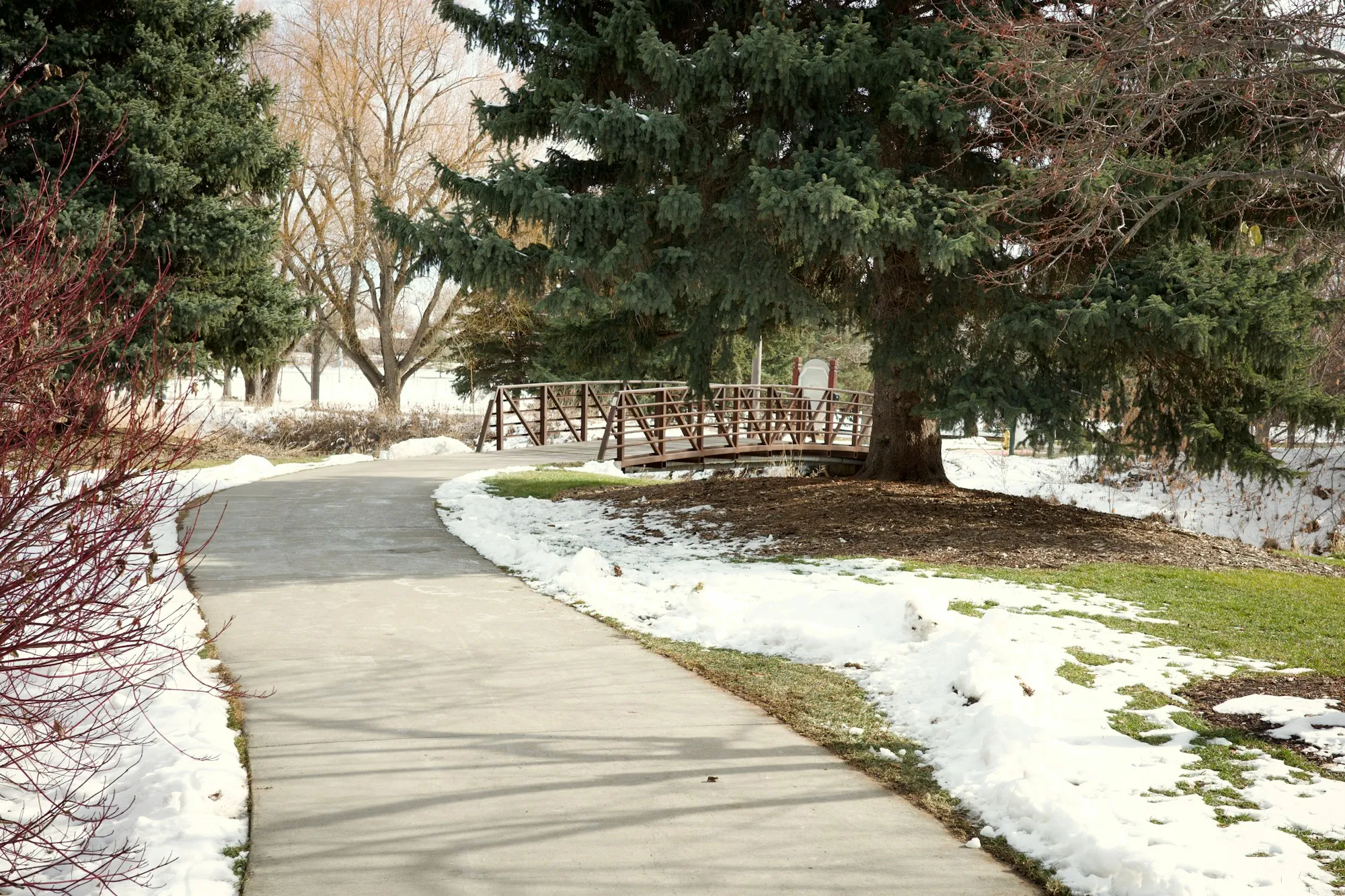
A bad sidewalk announces itself. One panel sits an inch higher than the next. Water pools in the low spot by the door and turns to ice. Cracks spread until chunks come loose. Usually the cause is underneath: a thin slab on unpacked dirt, tree roots, or no slope at all. Replacing it the same way just buys a few years. Our walkways start with the old concrete broken out and hauled off. The path is dug down, a stone base goes in and gets compacted, and forms are set so the walk falls slightly to one side. That cross slope is small enough you will not feel it underfoot and big enough to move rain off the surface. We pour at a thickness of about 4 inches for regular foot traffic, and heavier where a walk crosses a driveway or gets wheeled bins. Control joints go in at even spacing so the walk looks tidy and cracks stay in the lines. A light broom finish gives grip. Front walks, side paths to the gate, the sidewalk out front, all handled the same way.
Walkway Work, Piece by Piece
Short path or long run, these are the pieces that go into it.
Tear-out and haul-away
Tilted or broken panels broken loose and trucked away.
Dug and based
Soil cut to depth, stone base spread and compacted so the walk sits evenly.
Cross slope
A slight fall built into the forms so water runs off to the side, not toward the door.
Steady thickness
About 4 inches for foot traffic, heavier at driveway crossings and gate openings.
Even joints
Control joints cut at regular spacing for a clean look and controlled cracking.
Broom finish and edges
Textured surface for traction, smooth tooled edges, lawn backfilled at the sides.
Order of Work on a New Walk
Tape and pencil
A crew lead checks the route, where it meets the door, the low spots and any roots, then puts a price in writing.
Out with the old
Broken sections come out, the path is dug and the base is packed. Forms are set with the cross slope built in.
Pour and finish
The walk is poured, floated, broomed and jointed. Forms come off, edges are backfilled and the site is cleaned.
Why Our Walks Stay Flush
No dirt-bottom pours
Every walk sits on compacted stone, so panels settle evenly if they settle at all.
Water steered off
The built-in side slope keeps puddles and ice patches off the path.
Neat to look at
Straight forms, even joint spacing and crisp edges. It looks like it belongs to the house.
- Old walk hauled away
- Side slope for runoff
- Evenly spaced joints
- Broomed for grip
Tired of Stepping Over That Raised Panel?
Describe the walk and what is wrong with it. We will tell you what replacing it involves and what it costs.